
Running a Sex Offender Check in Oneida County
The New York State Sex Offender Registry Subdirectory is the first source for a public Oneida County sex offender check. The New York State Division of Criminal Justice Services, or DCJS, administers it. Searchers may work from a known name or narrow geographic fields to Oneida County. The public display follows New York's judicial risk-level and designation rules. It is not a list of every person who has ever been required to register, and it is not organized around the federal tier labels used in some other states.
A second route is the DCJS registry telephone line. It can help with a named-person inquiry that needs identifying facts. For a person who may live outside New York, the federal national search adds participating jurisdictions without replacing the state source. Suspected failure to register belongs with local law enforcement, while an emergency belongs with 911. Those channels answer different questions, so a missing internet result should lead to a measured follow-up, not a firm conclusion.
Oneida County Level 1 Registry Gaps
A common search mistake is to treat no online match as proof that no registration record exists. In New York, ordinary public internet results center on Level 2 and Level 3 registrants. A Level 1 person generally does not appear in the usual name search unless a special designation makes the record public. Statutory inquiry channels may provide limited information that the web form does not display.
Risk level and special designation are separate concepts. A court assigns Level 1, 2, or 3 based on the New York process, while labels such as sexual predator, sexually violent offender, or predicate sex offender can affect both duration and disclosure. This is why readers should not infer either risk or registration term from a blank Oneida County result. DCJS explains the state's registry levels and public access, and a direct inquiry is the sound fallback when the person is known.
Note: A public search result reflects statutory publication rules, not a complete census of every current or past New York registrant.
Searching the New York State Sex Offender Registry
Begin at the state Subdirectory and read the conditions before entering a search. The live form may show a CAPTCHA or other security control. Use only the fields actually presented, and keep spelling and location facts close at hand. Oneida County is an optional limiter, not a substitute for matching the profile's other identifiers. A name search and a geographic search answer different questions.
- Open the official DCJS Subdirectory, review its disclaimer, and complete any security check shown.
- Choose the available name or location mode. Enter the known spelling, Oneida County, ZIP code, or address as the form permits.
- Review the result list without assuming that a similar name identifies the person sought. Compare age and physical details.
- Open the profile and read the risk level, designation, offense, registration status, and agency fields together.
| Field or Control | Type | Required | Use |
|---|---|---|---|
| Last Name / First Name | Text mode | Mode-dependent | Find a known person; follow the live form's exact or partial-name directions. |
| County | Dropdown | Optional | Select Oneida County to limit location-based results. |
| ZIP Code | Text | Optional | Narrow a geographic search when the ZIP is known. |
| Address | Text | Mode-dependent | Supports location or proximity searching where the live interface offers it. |
| Risk Level / Designation | Filter | As offered | Public results focus on Level 2, Level 3, and designated Level 1 records. |
| Search / Clear | Buttons | No | Submit the query or reset the entered fields. |
The official New York registry search shown here illustrates the state-controlled entry point.
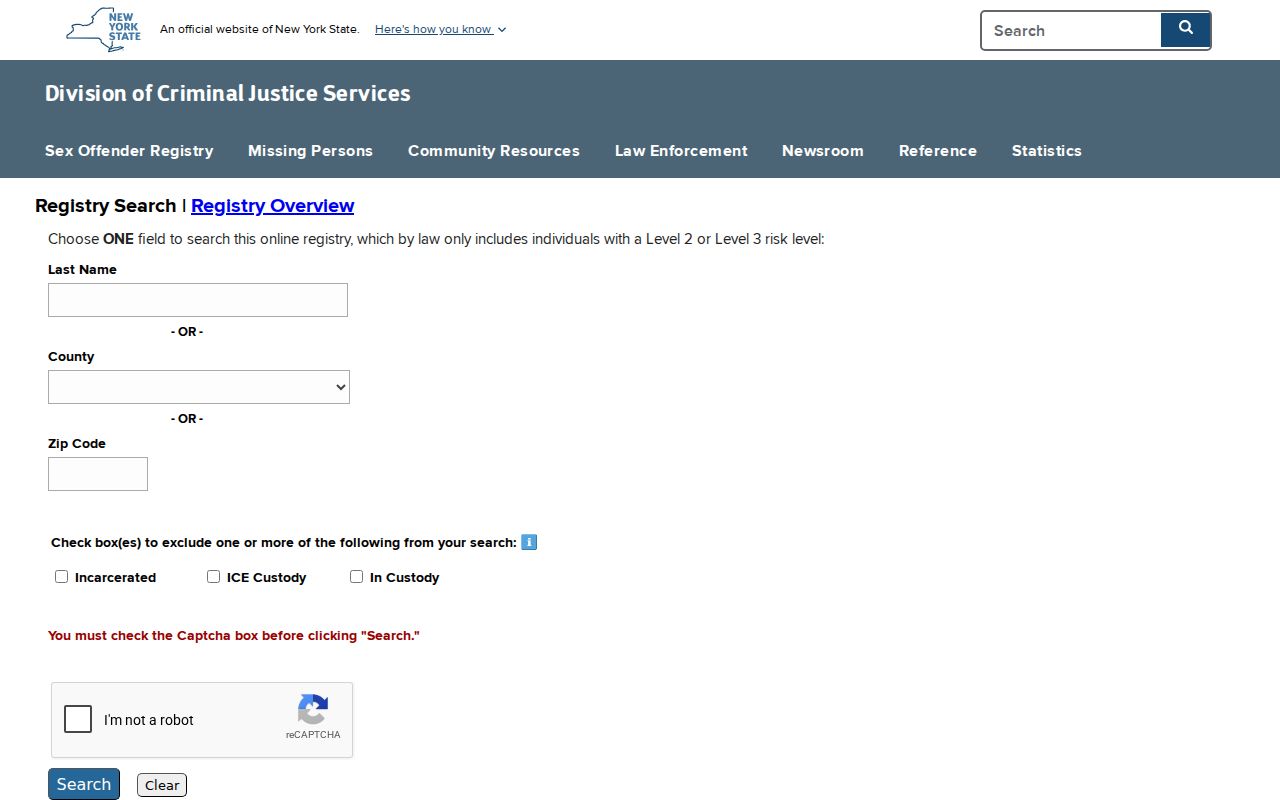
The interface makes the county and name fields useful starting points, but the publication limits still govern what can appear.
Oneida County Registry Phone Search
Call the DCJS Sex Offender Registry at 800-262-3257 when a known-person question remains after the web search. Have identifying information ready. The phone route matters most when Level 1 publication rules may explain an absent result or when a name could match more than one person. It is an inquiry channel, not a way to bypass statutory limits.
Keep a short record of the spelling, place, and identifying facts used. If the concern is an address that appears wrong or possible failure to comply, report that issue to the police agency with jurisdiction. Oneida County Probation may supervise a person under a sentence, but that role differs from maintaining the registry. The county Probation Department reports supervising more than 100 sex offenders and may use GPS in qualifying cases. Supervision status does not alter which office controls the public registry entry.
What a Registry Profile Shows
A New York public registry profile combines identity, registration, and case-related fields. Read those parts as a whole. Exact visibility varies with current law, interface rules, risk level, and designation. Some records may include a vehicle, school, or other authorized location field. The profile is still a notification record. It does not replace the originating criminal court file, and the listed offense should not be treated as a full account of every docket event.
| Name and Aliases | Published legal name and alternate names used to distinguish the record. |
|---|---|
| Photo and Description | Photograph plus permitted age, sex, race, height, weight, hair, eye, scar, mark, or tattoo details. |
| Address or Location | Home or other location information to the extent New York law permits publication. |
| Offense and Case Facts | Offense description or statute, conviction information, sentence data, and victim-age category where displayed. |
| Level and Designation | Judicial risk level and any separate special designation affecting duties or visibility. |
| Registration Status | Current status and supervising or registration agency information available to the public. |
The DCJS registry disclaimer interface supplies context for the fields and limits shown in public records.
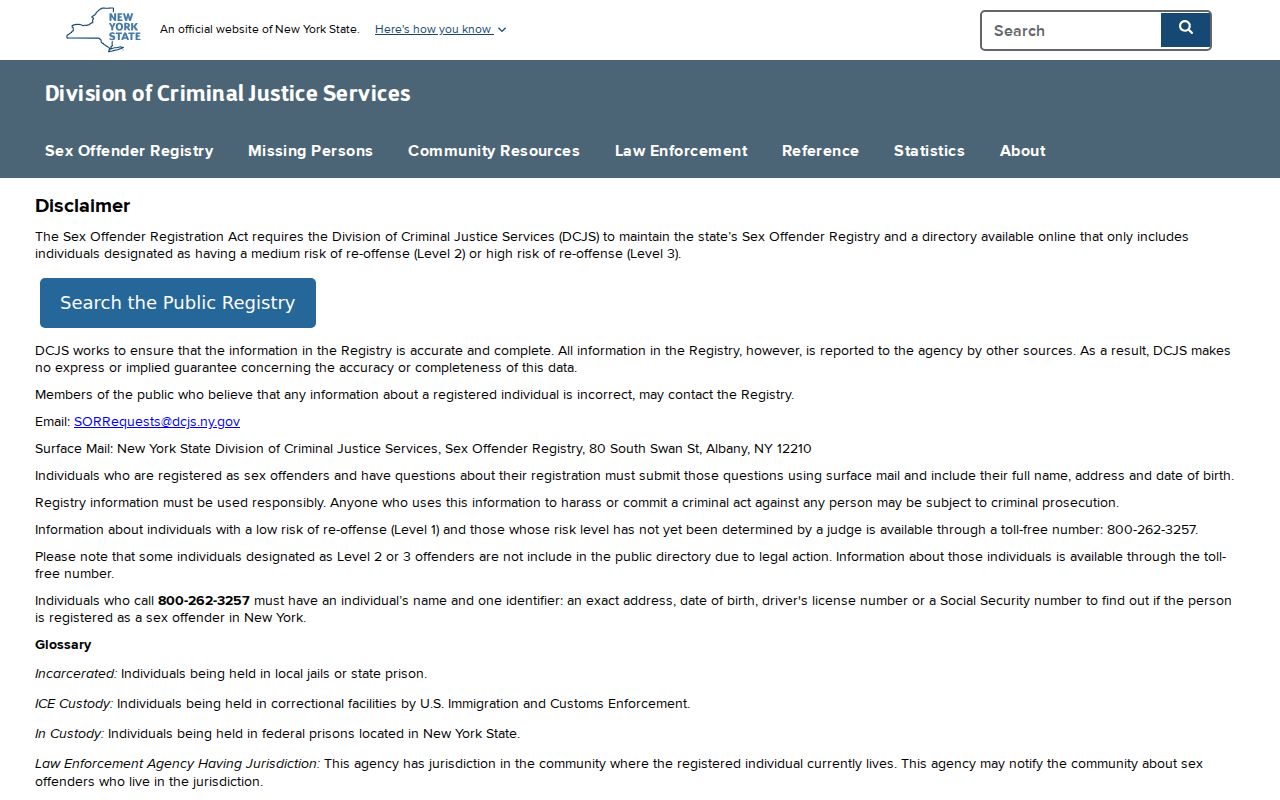
That context is essential because a visible field may be current registry data without being a complete history of the underlying case.
Oneida County Registry and Probation Roles
Oneida County Probation and DCJS do not keep the same record. Probation supervises people who receive a county probation sentence and reports that its caseload includes more than 100 sex offenders. GPS may be used in qualifying cases. Those supervision facts do not make Probation the custodian of the public registry, and they do not mean every registrant is on county probation.
DCJS maintains the public New York registry entry. A court file documents the conviction and sentence. Probation holds supervision records, much of which is not open to ordinary public inspection. When a Oneida County registry profile and a supervision question seem to conflict, direct the registry question to DCJS and the lawful supervision question to the appropriate agency. Keeping the roles apart avoids reading a public profile as a full account of present supervision.
Oneida County Registry and NSOPW
The DCJS Subdirectory is the authoritative state source for New York entries. The National Sex Offender Public Website, or NSOPW, sends a federated query across participating jurisdictions. It is useful when a person may have moved across state lines or when a family wants to check more than one jurisdiction. Each contributing jurisdiction still controls its source data, publication rules, and update timing.
Use the national layer to widen scope, then return to the relevant state's official record for detail. A difference between NSOPW and the Oneida County-filtered DCJS result does not by itself establish an error. Check spelling, place, and jurisdiction first. Then contact the office that owns the source record. This comparison prevents a national result from being mistaken for a separate federal registry file.
The national registry interface shown below demonstrates the cross-state search layer.
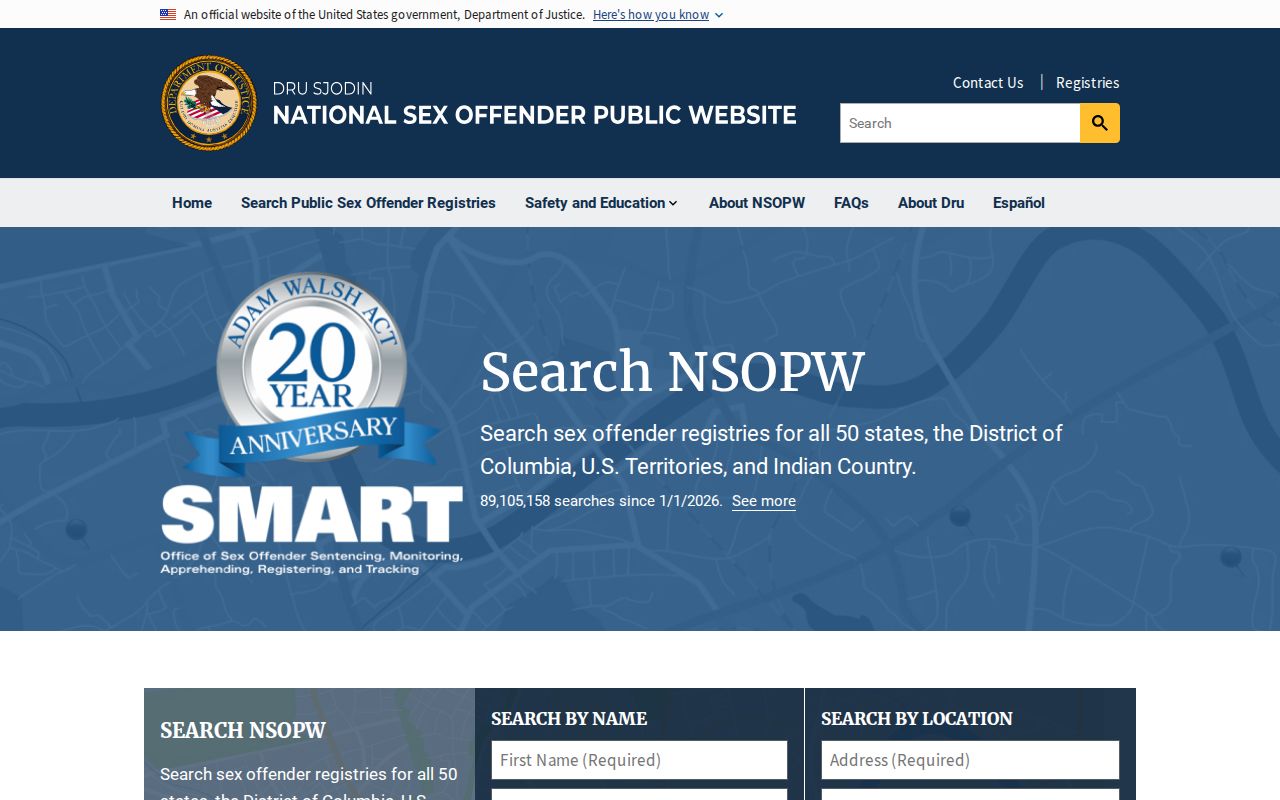
Its broad reach is valuable, but New York's DCJS entry remains the direct source for a record tied to Oneida County.
Registration Requirements and Levels in New York
New York uses three judicial risk levels. Publication and duration do not move in a simple one-to-one pattern because a special designation, offense date, and governing duty can change the result. Level 1 address verification is generally annual. Level 3 address verification is generally every 90 days. Current DCJS guidance and Correction Law section 168-h should be checked before relying on a schedule.
| Level or Designation | Public Treatment | Duration Headline | Verification Headline |
|---|---|---|---|
| Level 1, low risk | Usually absent from ordinary internet name results unless designated | Often 20 years; lifetime for specified special designations | Generally annual address verification |
| Level 2, moderate risk | Public registry information | Generally lifetime | Duties follow current law and DCJS guidance |
| Level 3, high risk | Public information with broader notification | Generally lifetime | Generally every 90 days for address verification |
Correction Law section 168-l governs risk-level determination and public access. It is safer to confirm the individual profile and current agency guidance than to calculate a term from the level alone.
Correcting Oneida County Registry Addresses
An address that seems stale calls for verification, not confrontation. Recheck the profile, date or status fields shown, and the exact person. If the information still suggests noncompliance, contact the local police agency that covers the address and provide the specific facts. Call 911 only for an emergency. DCJS controls the public entry, while law enforcement investigates compliance.
Do not use a profile to visit a home or challenge a resident. Address publication can vary by level and legal authority, and a public location field may not explain custody, supervision, or case status. If the concern is a court outcome rather than registration compliance, the underlying file belongs with the originating court. The broader Oneida County criminal history channels explain how court, custody, and repository records differ.
Note: Give law enforcement the profile details and the apparent conflict, then let the proper agency test whether a violation occurred.
Lawful Use and Community Notification
Registry information supports personal and family safety, neighborhood awareness, and informed use of official notification channels. It does not grant permission to threaten, intimidate, harass, or take matters into private hands. A profile should also be matched with care before a conclusion is drawn. Similar names, a changed location, or limits on public fields can lead to a harmful misidentification.
New York's warning has legal force. Correction Law section 168-q addresses unauthorized use and misuse consequences. Community notice is meant to share facts within the limits set by law. It is not an invitation to punish a registrant or members of a household, and it does not replace police action when a real threat or suspected violation is present.
Registry misuse is a crime: Do not use Oneida County registry information to threaten, intimidate, or harass any person. New York Correction Law §168-q provides criminal consequences for misuse.